
Best recruitment agency in UAE — Gulf Workforce consultants Dubai

Best Recruitment Agency in UAE: How to Choose the Right Partner in 2026

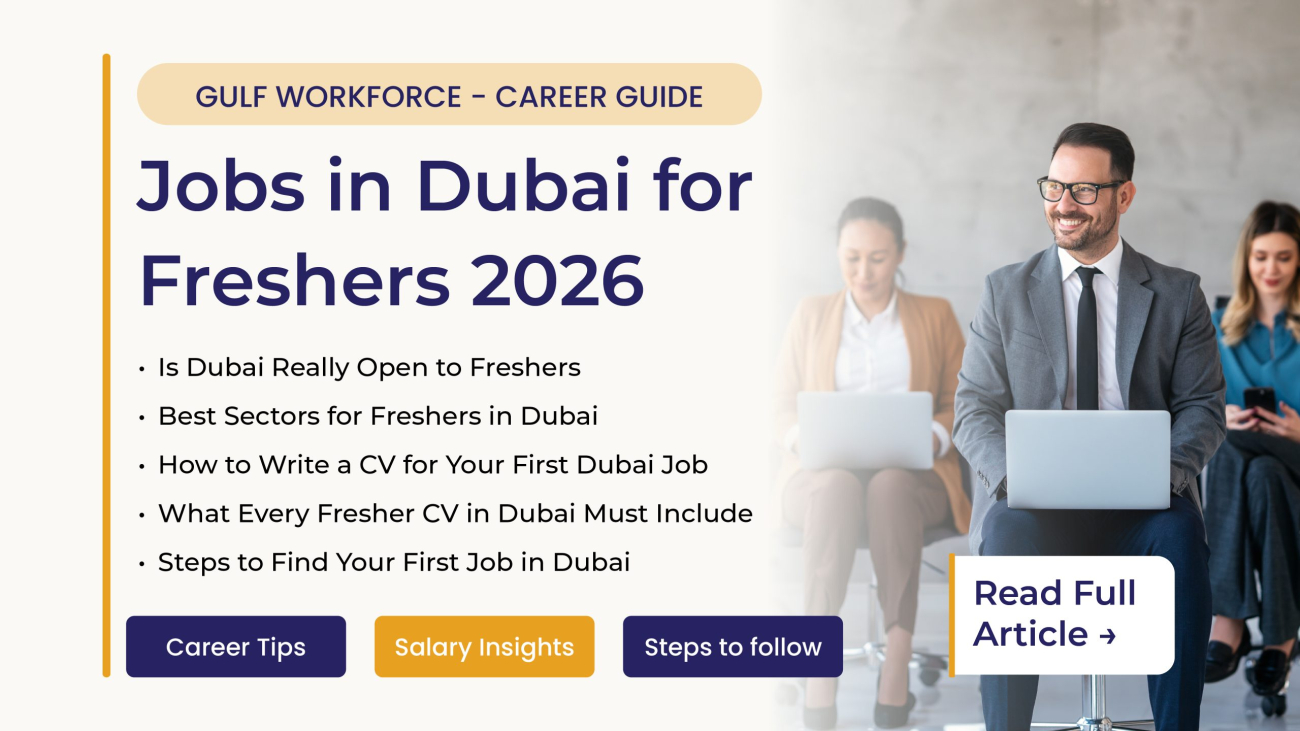
Jobs in Dubai for freshers 2026 — young professionals in Dubai office

Jobs in Dubai for Freshers 2026: How to Land Your First UAE Job

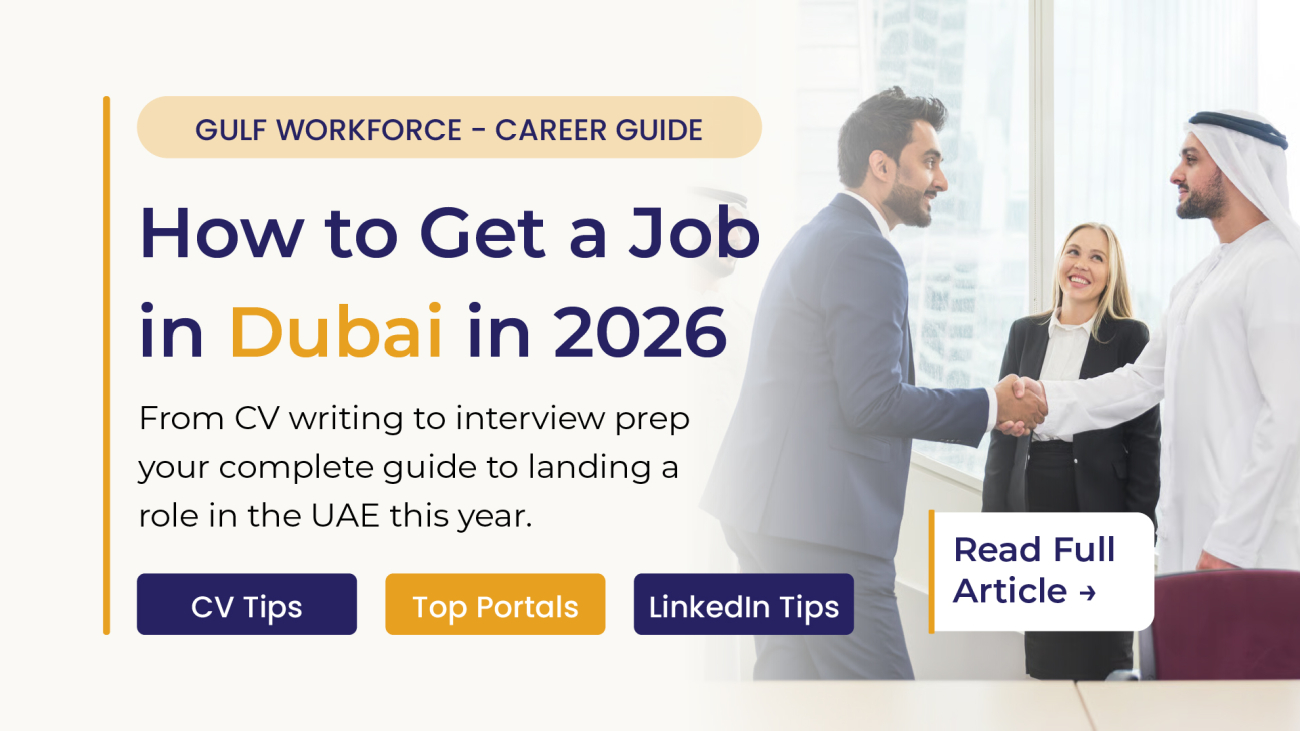
Gulf Workforce — how to get a job in Dubai 2026 guide for job seekers

How to Get a Job in Dubai in 2026: 7 Proven Steps Every Job Seeker Must Know

UAE salary guide by industry 2026 infographic

UAE Salary Guide by Industry 2026: How Much Should You Really Be Earning?

If you are working in the UAE — or planning to — the number one question on your mind is: am I being paid what I am worth? In 2026, UAE salary expectations are shifting across industries, and knowing where your pay stands can make the difference between staying put and landing a major career upgrade.

This guide breaks down UAE salary benchmarks by industry in 2026, covering sectors like FMCG, retail, banking, hospitality, construction, real estate, and education — the sectors that make up the backbone of the UAE job market. All figures are sourced from the Michael Page UAE Salary Guide 2026, Cooper Fitch UAE Salary Guide 2026, Korn Ferry UAE Salary Forecast 2026, and The National’s salary coverage for January 2026.

The UAE Salary Landscape in 2026: What You Need to Know First

Before diving into industry-specific figures, here are the key salary trends shaping the UAE market right now:

  • Average monthly salary in the UAE: approximately AED 15,000 across all sectors (source: recent government and recruitment data, 2026).
  • Salary growth forecast: between 1.6% and 4.1% in 2026, according to Cooper Fitch and Korn Ferry. This is selective, not across-the-board.
  • Who gets the biggest hikes: AI engineers, cybersecurity specialists, data analysts, compliance professionals, and project directors in high-demand fields.
  • UAE workforce growth: the workforce grew 9% in 2025, with new business formations up 14% (Michael Page UAE Salary Guide 2026).
  • Job satisfaction vs. openness to change: 52% of UAE employees are satisfied with their current salary, yet nearly two-thirds would consider changing jobs if the right offer came along.

Key advantage: the UAE has zero personal income tax, meaning your gross salary is your take-home salary — a significant edge over many other global markets.

1. FMCG (Fast-Moving Consumer Goods) Salary Guide UAE 2026

The FMCG sector remains one of the most active hiring markets in the UAE, driven by population growth and consumer demand. Roles in sales, trade marketing, supply chain, and category management continue to see strong demand.

RoleEntry (AED/mo)Mid-Level (AED/mo)Senior (AED/mo)
Sales RepresentativeAED 6,000 – 9,000AED 12,000 – 18,000AED 22,000 – 30,000
Key Account ManagerAED 10,000 – 14,000AED 18,000 – 25,000AED 30,000 – 45,000
Category ManagerAED 14,000 – 18,000AED 22,000 – 30,000AED 35,000 – 50,000
Supply Chain ManagerAED 12,000 – 16,000AED 20,000 – 28,000AED 32,000 – 48,000
Trade Marketing ManagerAED 12,000 – 15,000AED 18,000 – 25,000AED 30,000 – 45,000

Gulf Workforce insight: FMCG companies in the UAE are actively hiring for roles with experience in modern trade, e-commerce distribution, and digital shopper marketing. These skills command a salary premium of 15–20% over traditional FMCG roles.

2. Retail Salary Guide UAE 2026

Retail in the UAE is undergoing a significant transformation with the rise of omnichannel retail and luxury segment expansion. Above-average pay increases are expected for those entering the financial services, real estate, industrial, or retail sectors in 2026 (Korn Ferry UAE Salary Forecast 2026).

RoleEntry (AED/mo)Mid-Level (AED/mo)Senior (AED/mo)
Retail Sales AssociateAED 3,500 – 5,500AED 6,000 – 9,000AED 10,000 – 14,000
Store ManagerAED 8,000 – 12,000AED 14,000 – 20,000AED 22,000 – 35,000
Retail Operations ManagerAED 14,000 – 18,000AED 20,000 – 28,000AED 30,000 – 45,000
Visual MerchandiserAED 5,000 – 8,000AED 9,000 – 14,000AED 15,000 – 22,000
E-commerce ManagerAED 10,000 – 15,000AED 18,000 – 28,000AED 30,000 – 50,000

Gulf Workforce insight: Luxury retail roles in Dubai Mall, City Walk, and Dubai Hills Mall command 20–30% higher packages than standard retail. Bilingual candidates (English + Arabic or French) are consistently preferred.

3. Banking and Financial Services Salary Guide UAE 2026

Banking and financial services show the strongest salary momentum heading into 2026. Accountants in mid-level roles can expect between AED 20,000 and AED 27,000 per month, while mid-level associate roles across investments typically reach AED 50,000 to AED 60,000 (Michael Page UAE Salary Guide 2026).

RoleEntry (AED/mo)Mid-Level (AED/mo)Senior (AED/mo)
AccountantAED 8,000 – 12,000AED 20,000 – 27,000AED 30,000 – 45,000
Relationship ManagerAED 12,000 – 18,000AED 22,000 – 35,000AED 40,000 – 60,000
Investment AssociateAED 15,000 – 22,000AED 50,000 – 60,000AED 70,000 – 100,000+
Compliance OfficerAED 12,000 – 18,000AED 25,000 – 40,000AED 45,000 – 70,000
Finance ManagerAED 18,000 – 25,000AED 28,000 – 45,000AED 50,000 – 80,000

Gulf Workforce insight: Roles in fintech, wealth management, compliance, and risk functions are experiencing the sharpest salary growth in this sector, with some specialist roles seeing increases of over 10% in 2026.

4. Hospitality and HORECA Salary Guide UAE 2026

The UAE’s tourism sector is rebounding with record visitor numbers, fuelling strong demand for hospitality and HORECA professionals. Dubai’s vision to attract 25 million tourists annually by 2025 is driving continued investment in this space.

RoleEntry (AED/mo)Mid-Level (AED/mo)Senior (AED/mo)
Chef de PartieAED 4,000 – 6,000AED 7,000 – 10,000AED 12,000 – 18,000
F&B ManagerAED 8,000 – 12,000AED 14,000 – 20,000AED 22,000 – 35,000
Hotel General ManagerAED 25,000 – 35,000AED 40,000 – 60,000AED 65,000 – 100,000+
Guest Relations ManagerAED 7,000 – 10,000AED 12,000 – 18,000AED 20,000 – 30,000
Executive ChefAED 15,000 – 20,000AED 22,000 – 35,000AED 40,000 – 60,000

Gulf Workforce insight: Post-pandemic recovery has been strong in UAE hospitality. Candidates with pre-opening hotel experience and multi-property management backgrounds are commanding a significant premium in 2026.

5. Construction Salary Guide UAE 2026

Construction and real estate sit on the high side of UAE salary trends in 2026, especially for project directors and senior engineers leading mega-projects in Dubai and Abu Dhabi. The Central Bank expects real GDP to accelerate to around 5.3% in 2026, with construction as a key pillar.

RoleEntry (AED/mo)Mid-Level (AED/mo)Senior (AED/mo)
Site EngineerAED 6,000 – 10,000AED 12,000 – 20,000AED 22,000 – 35,000
Project ManagerAED 15,000 – 22,000AED 25,000 – 40,000AED 40,000 – 70,000
Quantity SurveyorAED 8,000 – 14,000AED 16,000 – 25,000AED 28,000 – 45,000
HSE ManagerAED 10,000 – 15,000AED 18,000 – 28,000AED 30,000 – 50,000
Project DirectorAED 30,000 – 40,000AED 45,000 – 60,000AED 65,000 – 100,000+

Gulf Workforce insight: Many construction roles include accommodation and transport — worth an additional AED 3,000–8,000 per month in real value. Always factor total package, not just basic salary, when evaluating construction offers.

6. Real Estate Salary Guide UAE 2026

Dubai real estate posted record transactions in 2025 and the momentum continues into 2026. Real estate is one of the sectors expected to see above-average pay rises this year, driven by population growth, foreign investment, and mega-project activity.

RoleEntry (AED/mo)Mid-Level (AED/mo)Senior (AED/mo)
Real Estate AgentAED 3,000 + commissionAED 5,000 + commissionAED 8,000 – 15,000 + commission
Property ConsultantAED 5,000 – 8,000AED 10,000 – 18,000AED 20,000 – 35,000
Property ManagerAED 8,000 – 12,000AED 14,000 – 22,000AED 25,000 – 40,000
Real Estate DirectorAED 20,000 – 30,000AED 35,000 – 50,000AED 55,000 – 90,000
Sales & Marketing ManagerAED 12,000 – 18,000AED 20,000 – 35,000AED 40,000 – 65,000

Gulf Workforce insight: Real estate agents in Dubai are largely commission-driven. Top performers in premium property zones like Palm Jumeirah and Dubai Hills regularly earn AED 50,000–100,000+ per month during peak cycles. The variable earning potential here is exceptional.

7. Education Salary Guide UAE 2026

Education is a growing sector in the UAE, supported by the expansion of private schools, international universities, and corporate training providers. Bilingual teachers and those with IB or British curriculum experience are particularly in demand.

RoleEntry (AED/mo)Mid-Level (AED/mo)Senior (AED/mo)
School Teacher (Western curriculum)AED 8,000 – 12,000AED 14,000 – 20,000AED 22,000 – 32,000
Head of DepartmentAED 16,000 – 22,000AED 24,000 – 35,000AED 38,000 – 55,000
School PrincipalAED 25,000 – 35,000AED 38,000 – 55,000AED 60,000 – 90,000
Corporate TrainerAED 10,000 – 15,000AED 16,000 – 25,000AED 28,000 – 45,000
University LecturerAED 12,000 – 18,000AED 20,000 – 30,000AED 32,000 – 55,000

Gulf Workforce insight: Education packages in the UAE often include accommodation allowances, annual flight tickets, and children’s school fee support — which can add AED 5,000–15,000+ in total package value per month.

Key Salary Takeaways for UAE Professionals in 2026

  • Salary increases in 2026 are targeted, not universal — high performers and hard-to-replace specialists will see the most movement.
  • Technology, banking, and construction lead salary growth; administrative and entry-level roles remain relatively flat.
  • Zero personal income tax continues to make the UAE one of the highest real-income markets in the world.
  • Total package — including housing allowance, transport, medical, annual tickets, and bonuses — often adds 30–50% on top of basic salary.

Skills in AI, data analytics, digital marketing, compliance, and project management are consistently earning salary premiums across all sectors.

How to Negotiate Your Salary in the UAE: 3 Practical Tips

1. Know your total package value, not just your basic salary. Many candidates focus on basic pay alone. In the UAE, housing, transport, medical, schooling allowances, and annual bonuses can add AED 3,000–20,000+ per month in real value. Always benchmark total compensation.

2. Use market data in your negotiation. Phrases like ‘Based on the Michael Page 2026 salary guide, the market rate for this role is…’ carry far more weight than a number pulled from thin air. Data-backed negotiation shows professionalism and market awareness.

3. Time your request strategically. Salary negotiation peaks in September–November and January–March, when UAE hiring activity is highest. Offers made during peak periods tend to be 10–15% more competitive than off-peak cycles.

Stay ahead of the UAE job market — follow Gulf Workforce on LinkedIn
We post daily UAE job market insights, live vacancies across FMCG, retail, banking, hospitality, construction, real estate, and education — plus expert hiring tips.

Follow us: linkedin.com/company/gulf-workforce
Visit us: gulfworkforce.com | Call: +971 4 381 2048
Level 1, C1 Building, World Trade Center District, Sheikh Zayed Road, Dubai
Gulf work force Recruitment services home page cover image of a region in Gulf

Gulf Job Market Trends 2026: A Complete Guide for Employers and Job Seekers

uae (2)

Finding the Right Career is Not a Sprint but a Premeditated Marathon

If finding a job were as easy as a 100m sprint, we’d all be in our dream roles by now! But reality check—it’s a marathon that requires strategy, endurance, and adaptability.
Especially in a diverse job market like the UAE, where professionals from over 200 nationalities compete for opportunities, standing out requires more than just a polished resume. It demands job knowledge, market awareness, discipline, and strong interpersonal skills.
So, how do you run this career marathon and not burn out? Let’s break it down:

Master Your Job Knowledge (Your Running Shoes!)

The UAE job market is fast-paced, and employers expect candidates to be skilled and job-ready. To stay ahead:

  • Learn in-demand skills in your field.
  • Stay updated with market trends and emerging technologies.
  • Take certifications or courses to strengthen your expertise.
  • Develop a problem-solving mindset to tackle workplace challenges.

Pro Tip: Employers in Dubai and Abu Dhabi often look for candidates who can “hit the ground running.” Invest in upskilling before you start applying!

Understand the Market (Know the Race Track!)

Navigating the UAE job market means understanding:

  • Which industries are booming? (Tech, healthcare, real estate, logistics)
  • What skills are in demand? (AI, digital marketing, cybersecurity, project management)
  • How hiring trends change? (Seasonal hiring, Expo effects, recruitment cycles)
  • What employers look for? (Multilingual skills, adaptability, and cultural awareness)

 Pro Tip: LinkedIn, Bayt, GulfTalent, and networking events can give you valuable insights into hiring trends.

Develop Workplace Cultural Intelligence (Run with the Crowd!)

In the UAE, you will work with colleagues from diverse backgrounds—Indian, Filipino, British, Pakistani, Arab, European, and more. Understanding cultural diversity is a game-changer.

  • Respect different communication styles. (Some cultures are direct, others are subtle.)
  • Learn basic Arabic phrases. (It’s a plus and shows cultural appreciation!)
  • Be adaptable to different work ethics. (Western firms vs. local UAE companies operate differently.)
  • Avoid assumptions & stereotypes. (Every culture brings something valuable to the table.)

Pro Tip: Soft skills like emotional intelligence, patience, and cultural adaptability can set you apart in interviews and at work.

Build a Strong Personal & Professional Brand (Be Recognized on the Track!)

    Your career is not just about the job you do—it’s about how you present yourself.

    • Optimize your LinkedIn (Recruiters actively scout here!)
    •  Create a compelling CV tailored to UAE employers (ATS-friendly, achievement-focused)
    • Attend industry events & career fairs (GITEX, HR Summits, Expo conferences)
    • Start posting insights on LinkedIn (Become a thought leader in your field)

    Pro Tip: The UAE job market is highly referral-driven—networking is key to unlocking hidden opportunities!

    Stay Disciplined & Patient (Train Like a Marathon Runner!)

    Unlike job markets where career paths are straightforward, UAE professionals often switch industries, move to new roles, or even start businesses. The key is to:

    • Stay patient and consistent.
    • Have a long-term vision for your career.
    • Keep applying, networking, and learning.

     Pro Tip: Don’t jump at the first offer, choose a job that aligns with your growth goals.

    Resilience & Adaptability (Overcome Job Market Hurdles!)

    Rejections? Ghosted after an interview? It happens to the best of us! But how you handle setbacks defines your success.

    • Stay positive and keep learning.
    •  Adapt to market changes.
    •  Seeking mentorship from industry professionals.
    •  Join professional communities (LinkedIn Groups, Toastmasters, Industry Meetups).

    Pro Tip: The UAE job market is highly competitive, but resilient professionals always find their place.

    Final Thought: Run Your Own Race!

    Your career isn’t about who gets a job first. It’s about finding the right job and growing into your full potential. Be strategic, stay adaptable, and most importantly—keep going!

    Gulf job market trends 2026 — Dubai skyline with professionals

    Hiring the Right Talent in the Gulf: A Strategic Approach for Businesses

    The Gulf region is home to some of the world’s fastest-growing industries, from construction and real estate to oil & gas, healthcare, and technology. With ambitious growth plans and a diverse workforce, hiring the right talent has become a top priority for businesses. But finding skilled, reliable, and culturally fit employees is easier said than done.
    At GWF (Gulf Workforce), we specialize in helping businesses like yours navigate the talent landscape and build high-performing teams. In this blog, we’ll break down the biggest hiring challenges in the Gulf and how you can overcome them.

    Understanding the Gulf’s Unique Hiring Landscape

    The GCC job market is different from the rest of the world. Here’s why:

    • Heavy reliance on expats – Over 80% of the workforce in the UAE and Qatar comprises expatriates.
    • Strict labor laws & visa regulations – Work permits, visa sponsorships, and labor contracts play a crucial role in hiring.
    • Skill gaps in key industries – Sectors like construction, healthcare, and technology often struggle to find local talent with the right expertise.
    • Cultural sensitivity & language barriers – Finding candidates who align with company culture and regional work ethics is vital.

    As a business, understanding these challenges helps you make smarter hiring decisions and stay ahead of the competition.

    The Biggest Hiring Mistakes Businesses Make (and How to Avoid Them!)

    • Mistake #1: Rushing the Hiring Process
      Many companies urgently hire without proper screening, leading to high turnover and wasted resources.
      ✔ Solution: Use a structured hiring process with pre-screening, interviews, and reference checks to ensure the candidate is the right fit.
    • Mistake #2: Not Defining Job Roles Clearly
      Vague job descriptions lead to misaligned expectations, which increases employee dissatisfaction.
      ✔ Solution: Be clear and detailed in your job postings, outlining skills, experience, and responsibilities.
    • Mistake #3: Ignoring Employer Branding
      Top talent prefers companies with strong reputations and positive work cultures.
      ✔ Solution: Build a strong employer brand through LinkedIn presence, employee testimonials, and competitive salary packages.
    • Mistake #4: Hiring Based Only on Skills (Ignoring Culture Fit!)
      A highly skilled candidate who doesn’t fit into your work culture will struggle to stay long-term.
      ✔ Solution: Focus on both technical skills and cultural alignment to ensure a great long-term hire.

    How GWF Helps You Find the Right Talent Faster

    At GWF, we take a data-driven, human-centric approach to recruitment. Here’s how we make hiring easier, faster, and more effective for Gulf-based businesses:

    • Industry-Specific Expertise – Whether you’re hiring for real estate, construction, or IT, we connect you with top-tier talent who understand your industry.
    • Deep Candidate Screening – We go beyond resumes. Our screening process includes skill assessments, background verification, and cultural fit analysis.
    • Faster Hiring Process – We help businesses fill urgent roles within days, not months, ensuring minimal downtime.
    • Compliance & Visa Support – From offer letters to visa sponsorship guidance, we help navigate the legalities of hiring in the Gulf.
    • Market Insights & Salary Benchmarking – We provide real-time salary data and hiring trends to help you make competitive job offers.

    Ready to Hire? Let’s Talk!

    Hiring doesn’t have to be a headache. At GWF, we are dedicated to connecting Gulf businesses with the right talent—so you can focus on growth and success.

    • Need to hire skilled professionals for your team?
    • Looking for cost-effective recruitment solutions?
    • Want to ensure you get the best talent without the hassle?

    Contact us today for a free consultation, and let’s build your dream team together!

    uae

    Uncommon Opinions About Hiring in the Gulf Region

    The Gulf region is a dynamic and evolving job market, offering vast opportunities for both employers and job seekers. While conventional hiring wisdom dominates discussions, there are some less-talked-about perspectives that could reshape how companies attract and retain talent in the region. Here are some uncommon opinions about hiring in the Gulf that challenge the traditional norms.

    1. Experience Matters Less Than Adaptability

    Most hiring managers in the Gulf emphasize experience in the region. However, adaptability and problem-solving skills are far more critical in today’s market. With the rapid evolution of industries, professionals who can quickly learn, adjust, and innovate often outperform those with decades of localized experience.

    2. The “Gulf Experience” Requirement Is Overrated

    Many companies prioritize candidates with previous Gulf experience, assuming they understand the region’s work culture and business environment. While this can be beneficial, it also limits the talent pool. Fresh perspectives from outside the Gulf can bring innovation, efficiency, and a global mindset that many organizations need.

    3. Hiring Fast Isn’t Always a Good Thing

    Many businesses in the region push for quick hiring to fill vacancies, often rushing through the recruitment process. However, a more deliberate approach—investing time in candidate screening and cultural fit assessment—can lead to long-term employee retention and better performance.

    4. Salaries Are Often Determined by Nationality, Not Skill

    It’s an open secret that salary structures in the Gulf are sometimes influenced by nationality rather than skills and experience. Companies that shift towards competency-based pay structures will attract and retain top talent more effectively, leading to better productivity and fairness in the workplace.

    5. Job Hopping Is Not Always a Red Flag

    Candidates with multiple short-term roles are often labeled as job hoppers. However, in a fast-moving economy like the Gulf, professionals switch jobs frequently due to project-based work, shifting market demands, and better opportunities. Instead of dismissing such candidates, employers should assess the reasons behind the moves and the skills gained in each role.

    6. The Best Candidates Are Not Always Actively Looking

    Many employers focus only on job seekers who are actively applying, overlooking passive candidates who may be perfect for the role. A strategic recruitment approach should include headhunting and networking to tap into this hidden talent pool.

    7. Soft Skills Are More Critical Than Technical Skills in Certain Sectors

    While technical skills are essential, industries such as real estate, customer service, and sales in the Gulf demand strong interpersonal and communication skills. A highly skilled employee who lacks the ability to collaborate or build relationships may struggle in the long run.

    8. Remote Work Can Work in the Gulf

    Despite the region’s preference for on-site work, remote and hybrid models can be successfully implemented. Many companies are hesitant to adopt flexible work arrangements, but those that do often see higher employee satisfaction, lower turnover, and access to a wider talent pool beyond geographical constraints.

    9. Hiring for Diversity Isn’t Just a PR Move—It’s a Business Advantage

    Many organizations view diversity hiring as a compliance requirement or brand image booster. However, research shows that diverse teams perform better, solve problems faster, and drive innovation. Companies in the Gulf that embrace inclusivity will have a competitive edge.

    10. Retention Should Be a Higher Priority Than Recruitment

    Many companies focus on hiring new talent while neglecting strategies to retain existing employees. Offering career growth opportunities, competitive compensation, and a positive work culture can significantly reduce turnover and recruitment costs.

    Final Thoughts

    Hiring in the Gulf region is evolving, and businesses need to break away from outdated hiring practices. By challenging conventional wisdom and embracing new perspectives, companies can build stronger teams, attract top talent, and drive sustainable growth.

    At GWF, we help businesses navigate the complexities of hiring in the Gulf with a fresh and strategic approach. If you’re looking for the right talent or a smarter hiring strategy, let’s connect!

    📩 Contact us today to find your next top hire!

    uae

    Navigating the Gulf Job Market: Insights for Employers and Job Seekers in 2025

    The Gulf region continues to be a land of opportunity, attracting top talent and businesses alike. With its fast-evolving job market, driven by ambitious development projects and a growing emphasis on innovation, the need for skilled professionals has never been greater. At the same time, job seekers are facing stiff competition in securing their dream roles.

    Whether you’re a company looking to build a strong workforce or a professional aiming to advance your career in the Gulf, understanding market dynamics is the key to success. In this blog, we’ll explore strategies, trends, and tips that cater to both employers and job seekers.

    Section 1: Top Recruitment Trends in the Gulf for 2025

    1. Focus on Localization

    Governments in the Gulf, particularly in the UAE and Saudi Arabia, are prioritizing nationalization programs like Emiratization and Saudization. Employers must align their hiring strategies to comply with these initiatives while maintaining diversity.

    Tip for Job Seekers:
    If you’re an expatriate, highlight your unique skills and certifications that align with local demands. For nationals, emphasize your understanding of regional business practices and policies.

    2. Digital Transformation in Recruitment

    From AI-driven screening tools to virtual interviews, technology is reshaping hiring. Companies are leveraging Applicant Tracking Systems (ATS) to identify the best-fit candidates efficiently.

    Tip for Employers:
    Ensure your recruitment process is seamless and tech-friendly to attract top talent.

    Tip for Job Seekers:
    Optimize your CV for ATS systems by using industry-relevant keywords and a clean format.

    3. Demand for Specialized Skills

    Industries like construction, IT, healthcare, and renewable energy are booming, leading to a demand for niche skills.

    Tip for Employers:
    Partner with recruitment agencies specializing in your sector to save time and effort.

    Tip for Job Seekers:
    Upskill through certifications and stay updated with industry trends to remain competitive.

    Section 2: How Gulfworkforce.com Bridges the Gap

    At Gulfworkforce.com, we’re committed to connecting top-tier talent with leading employers in the Gulf. Here’s how we make a difference:

    • For Employers:
      • Access a diverse talent pool ready to meet your unique requirements.
      • Save time with our end-to-end recruitment solutions, from screening to onboarding.
    • For Job Seekers:
      • Get expert guidance on crafting the perfect CV.
      • Leverage our exclusive job listings and career resources to land your dream job.

    Section 3: Expert Tips for Employers and Job Seekers

    For Employers:

    1. Prioritize Employer Branding: A strong employer brand attracts top talent. Highlight your company culture, benefits, and growth opportunities in job postings.
    2. Leverage Data-Driven Insights: Use analytics to refine your hiring process and make informed decisions.

    For Job Seekers:

    1. Tailor Your Applications: Customize your CV and cover letter for each role to stand out.
    2. Network Actively: Attend industry events, connect on LinkedIn, and engage with potential employers.
    3. Prepare for Interviews: Research the company and practice common interview questions to leave a lasting impression.

    Section 4: Why Now Is the Best Time to Act

    With major projects like NEOM, Expo City Dubai, and Qatar’s growing post-World Cup economy, the Gulf job market is brimming with opportunities. Employers must act fast to secure top talent, and job seekers should seize the moment to find their ideal roles.

    Conclusion:

    The Gulf job market is a dynamic space filled with challenges and opportunities. By staying informed and partnering with the right recruitment services, both employers and job seekers can achieve their goals in 2025.

    At Gulfworkforce.com, we’re here to make that journey smoother for you. Whether you’re hiring or looking for your next big opportunity, let us be your trusted partner in success.